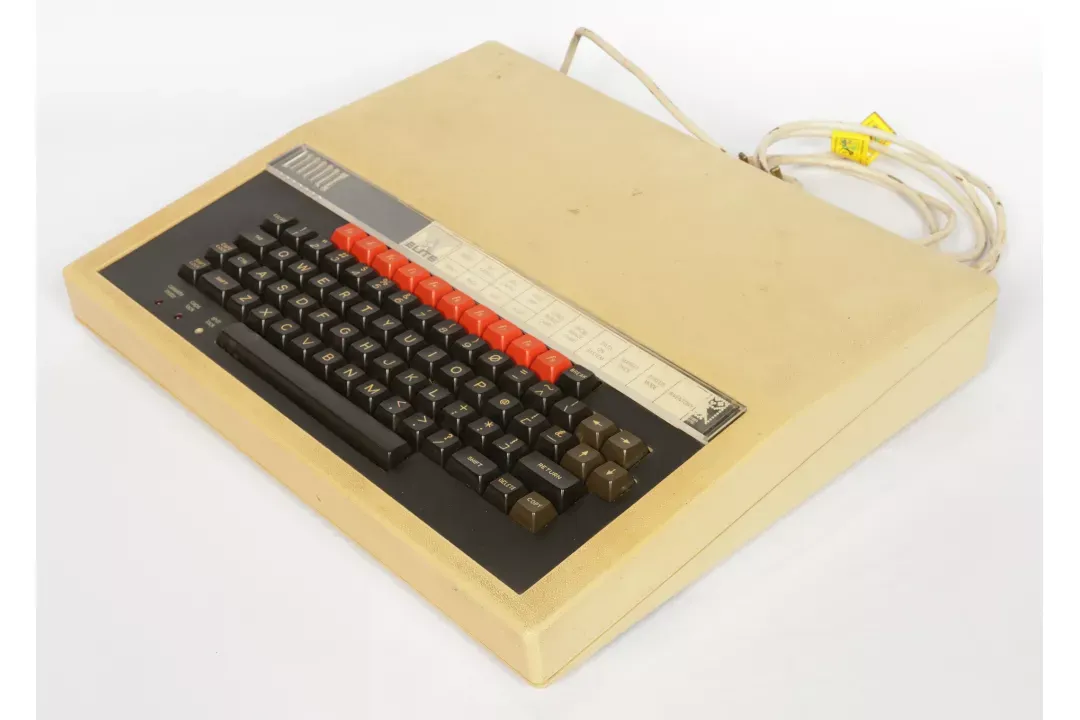
A new machine has joined the collection: an Acorn BBC Micro Model B. It still has an Elite function key strip in place above the red keys. The case is yellowed and dusty, but the keyboard looks complete.
// HISTORY
The BBC Micro came out of the BBC's Computer Literacy Project, which wanted a computer to go with its TV series about computing. Acorn won the contract and launched the machine in December 1981. The Model A cost £235 and the Model B £335, and the price of the Model B soon rose to £399. A government scheme helped schools buy them, and the BBC Micro became the standard school computer in Britain for most of the 1980s.
Acorn expected to sell about 12,000. In the end it sold around 1.5 million. The machine also led directly to the ARM processor: Acorn designed its own CPU for the BBC's successor, the Archimedes.
// SPECS
CPU ........ 6502A @ 2 MHz
RAM ........ 32K
ROM ........ 32K, BBC BASIC and the Acorn MOS, plus sideways ROM sockets
VIDEO ...... modes 0-7, up to 640x256, 8 colours, teletext mode 7
SOUND ...... SN76489, 3 channels + noise
STORAGE .... cassette, optional floppy disk interface
I/O ........ Tube, 1MHz bus, user port, printer, RS-423, analogue, Econet
// HOW IT WAS USED
For a whole generation in Britain, the BBC Micro was the machine in the corner of the classroom. Its fast, well-structured BBC BASIC included a built-in assembler, and its many ports made it a favourite for school science projects and robotics. Econet networking let schools share printers and disk drives. At home it ran some landmark games, most famously Elite by David Braben and Ian Bell in 1984, the game this key strip came from.
// WHAT'S NEXT
Here's the plan before it gets switched on:
[ ] clean the case and keyboard
[ ] replace the PSU's RIFA filter capacitors before powering on
[ ] power up and check the video output
[ ] check which ROMs and upgrades are fitted
Progress updates will be posted here. For more vintage machines, see the hardware section.