// ORIC REFERENCE :: ORIC-1 & ATMOS
// OVERVIEW
The Oric-1 was made by Tangerine Computer Systems of Cambridge, through its spin-off Oric Products International. It launched in 1983 to compete with the ZX Spectrum and sold especially well in France. In 1984 the Oric Atmos replaced it, with the same core hardware, a fixed BASIC ROM and a proper keyboard.
// SPECS
$ cat /proc/oric
CPU ........ 6502A @ 1 MHz
RAM ........ 16K or 48K
VIDEO ...... ULA, 240x200 hires, 40x28 text, 8 colours
SOUND ...... AY-3-8912, 3 channels
STORAGE .... cassette
BASIC ...... Oric Extended BASIC (Microsoft-derived)
I/O ........ Centronics printer port, expansion edge connector
CPU ........ 6502A @ 1 MHz
RAM ........ 16K or 48K
VIDEO ...... ULA, 240x200 hires, 40x28 text, 8 colours
SOUND ...... AY-3-8912, 3 channels
STORAGE .... cassette
BASIC ...... Oric Extended BASIC (Microsoft-derived)
I/O ........ Centronics printer port, expansion edge connector
// MEMORY MAP (48K)
$0000-$00FF  zero page
$0100-$01FF  6502 stack
$0300-$03FF  I/O page (6522 VIA at $0300)
$0400-$9FFF  user RAM / BASIC program area
$A000-$BF3F  hires screen (HIRES mode)
$B400-$B7FF  standard character set (TEXT mode)
$B800-$BB7F  alternate character set (TEXT mode)
$BB80-$BFDF  text screen, 40x28
$C000-$FFFF  BASIC ROM (16K)
// SERIAL ATTRIBUTES
Colour is set by attribute bytes stored in the screen itself. Each attribute takes up one character cell and applies to the rest of that line.
INK    0-7    0 black  1 red      2 green  3 yellow
PAPER 16-23   4 blue   5 magenta  6 cyan   7 white
              (paper = 16 + colour)
// HANDY BASIC
HIRES / TEXT        switch display mode
INK n / PAPER n     set colours (0-7)
CURSET x,y,fb       move graphics cursor
DRAW dx,dy,fb       relative line
CIRCLE r,fb         circle at cursor
PING / SHOOT / EXPLODE / ZAP   built-in sound effects
CLOAD "" / CSAVE "name"        tape load / save
// DOCUMENTATION
$ ls docs/oric/
▸ oric-service-manual.pdf ... official Oric-1 and Atmos service manual (79 pages)
▸ oric-psu-repair.pdf ... replacing a snapped earth pin on the original PSU
▸ oric-microdisc-circuit-details.pdf ... Microdisc controller component list
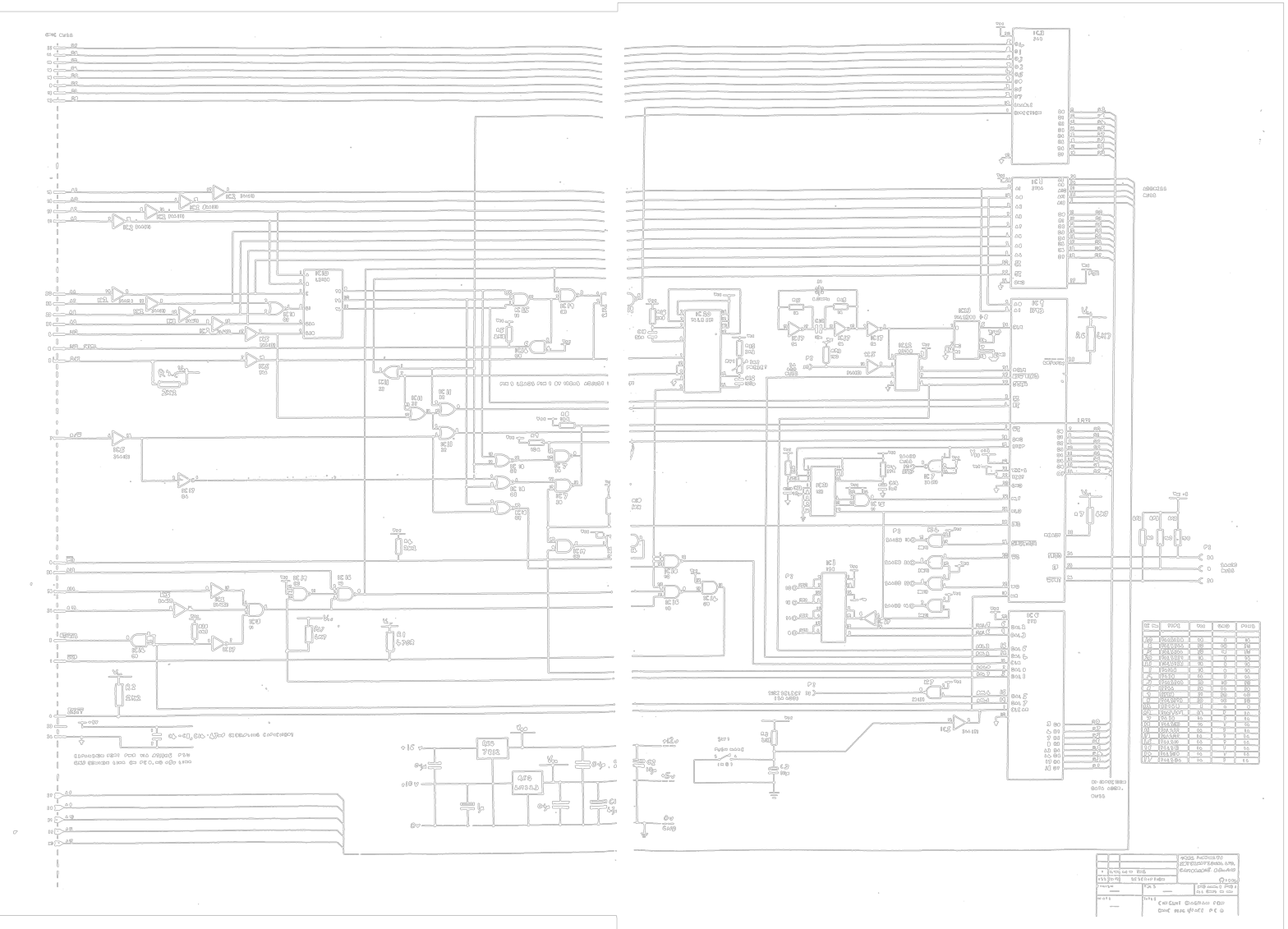
▸ oric-1-schematic-issue7.pdf ... Oric-1/Atmos schematic redrawn in KiCad, Issue 7 (8 sheets: power, PSG/keyboard, DRAM/ROM, tape, PAL video, CPU/VIA, ULA)
▸ oric-repair-checklist ... step-by-step mainboard repair checksheet, with photos (Mike Brown, oric.signal11.org.uk)
// SCHEMATICS
Click a diagram to open it full size.
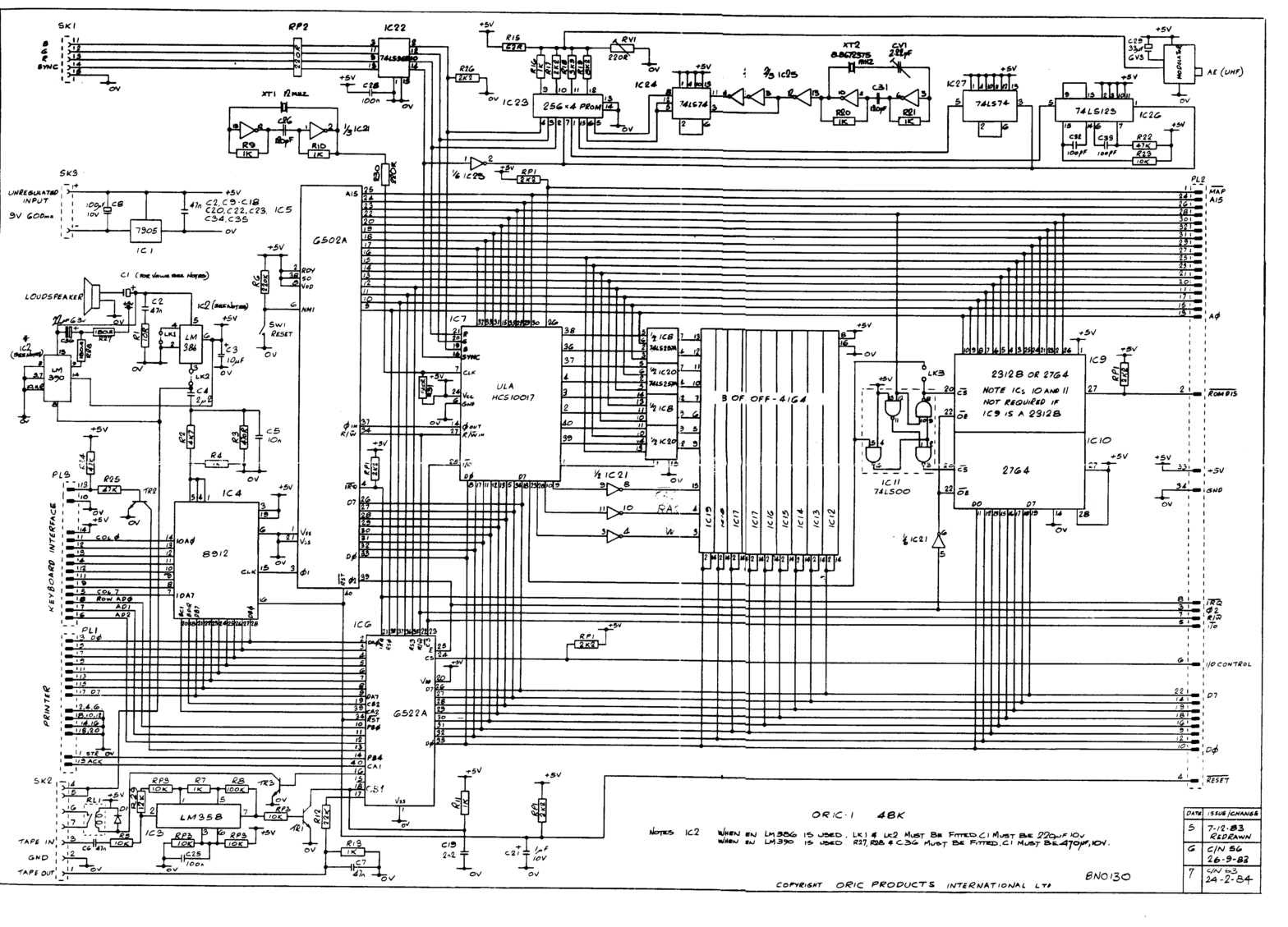
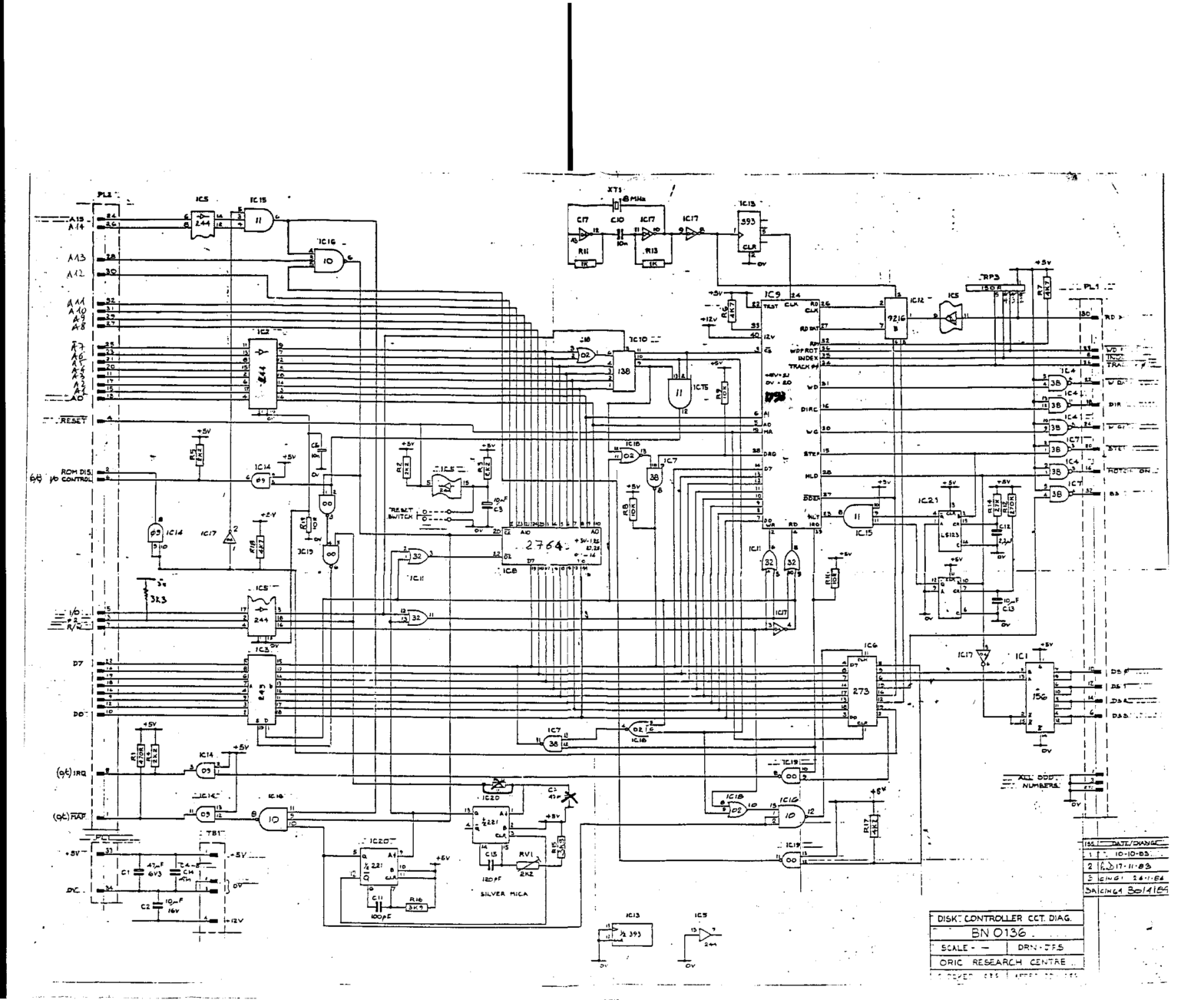
Documents typed up and scanned by Steve Marshall. Many thanks to his site, www.48katmos.freeuk.com, for keeping this material available.
The KiCad schematic (Issue 7) is © 2014-2015 Manoel Trapier, 986 Studio. Thanks to 986 Studio for publishing it: original PDF.
// MAIN CHIPS
$ lsic
6502A ...... CPU
ULA ........ video and system logic (custom)
6522 ....... VIA: keyboard, tape, printer, timers
AY-3-8912 .. sound, also scans the keyboard rows
6502A ...... CPU
ULA ........ video and system logic (custom)
6522 ....... VIA: keyboard, tape, printer, timers
AY-3-8912 .. sound, also scans the keyboard rows
// SPARES LIST
$ cat spares.txt
[ ] power supply (check voltage and polarity before use)
[ ] keyboard membrane
[ ] video cable
[ ] power supply (check voltage and polarity before use)
[ ] keyboard membrane
[ ] video cable